
- Home
- Institute
- Divisions
- Laboratories
- Reference laboratory of the Research Institute of Virology
Reference laboratory of the Research Institute of Virology
The reference laboratory ensures the quality control system for manufactured and imported test systems for the diagnosis of HIV/AIDS, viral hepatitis B and C, ensures the system of internal laboratory quality control, and conducts an external assessment of the quality of laboratory research in practical diagnostic laboratories in various regions of the Republic. Practical diagnostic laboratories are constantly provided with internal laboratory standards.
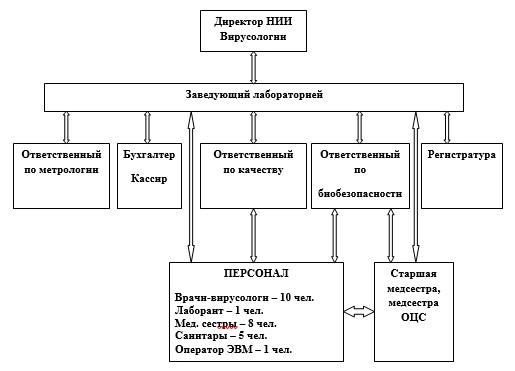
- The structure and staffing levels are specified in Appendix 1.
- The work procedure of the Reference Laboratory is organized on the basis of the CHARTER and regulatory documents on the organization of paid services in budgetary organizations, approved by the Ministry of Health of the Republic of Uzbekistan and legislative documents of the Republic of Uzbekistan.
- Volume of work and services:
- Conducting External Quality Assessment (EQA) of diagnostic laboratories involved in the diagnosis of HIV/AIDS, viral hepatitis B and C.
- Preparation of standard serum panels and internal laboratory standards for quality control of infection diagnostics.
- Assessment of the quality of manufactured and imported diagnostic test systems.
- Training center for laboratory specialists from all over the Republic.
Annually laboratory specialists are engaged in the program of the virology course and the program of professional specialization of a virologist.
- Provision of diagnostic services to the population on enzyme immunoassay diagnostics
(ELISA) and polymerase chain reaction (PCR) on a cost-accounting basis for the diagnosis of viral hepatitis, TORCH infections.
- Scientific research.
- Cooperation with the World Health Organization (WHO), the Institute of Plant Chemistry named after Academician S.Yu. Yunusov. (Uzbekistan), Federal Budgetary Institution of Science Central Research Institute of Epidemiology of Rospotrebnadzor (Russia), International Organization "Doctors Without Borders".
Zhurayev Rivojiddin Khafuzullaevich
Since January 20, 2021:
Director of the Reference Laboratory of the Research Institute of Virology of the Republican Specialized Scientific and Practical Medical Center for Epidemiology, Microbiology, Infectious and Parasitic Diseases
WORK ACTIVITIES
1987-1993 - Student of Andijan State Medical Institute
1993-1994 - Internship doctor of Namangan Regional Infectious Diseases Hospital
1994-1995 - Laboratory doctor of Namangan Regional Infectious Diseases Hospital
1995-1998 - Postgraduate student of the Institute of Epidemiology, Microbiology and Infectious Diseases
1998-2001 - Doctor of the ambulance team of Tashkent city.
2001-2003 - Head of the laboratory of the Institute of Epidemiology, Microbiology and Infectious Diseases
2003-2007 - Doctor of the Reference laboratory
2007-2009. - Head of the scientific project of the Research Institute of Virology
2009-2010. - Senior researcher of the Research Institute of Virology
2010-2012. - Doctor of the Reference laboratory
2012-2017. - Doctor of the Reference laboratory of the Research Institute of Virology.
2017-2020. - Chief physician of the infectious diseases hospital of the Namangan region.
2020-2020. Head of the Laboratory of Particularly Dangerous Viral Infections, Research Institute of Virology
2020-2021 - Head of the Reference Laboratory, Research Institute of Virology
2021 - present - Head of the Reference Laboratory, Research Institute of Virology, Republican Specialized Scientific and Practical Medical Center for Epidemiology, Microbiology, Infectious and Parasitic Diseases
Appendix 1
Organizational structure of the Reference Laboratory, Research Institute of Virology, Ministry of Health of the Republic of Uzbekistan
For almost 20 years, the Reference Laboratory has been the main institution responsible for ensuring the quality control system for the diagnosis of parenteral hepatitis and HIV. The activities carried out on external quality assessment of laboratory diagnostics, quality assessment of manufactured and imported test systems, testing and implementation of new diagnostic methods and training of laboratory specialists have significantly improved the situation with the quality of diagnostics of parenteral hepatitis and HIV infection in Uzbekistan.
The first external quality assessment (EQA) programs in the early 2000s helped to reveal the dramatic situation with the diagnostics of parenteral hepatitis and HIV at the local level. Periodically conducted EQA programs made it possible to promptly identify sources of problems and propose solutions. Thus, the First EQA Program pointed out a significant problem in the provision of equipment, the subsequent program made it possible to identify a number of problems with the provision and use of test systems, the subsequent program revealed the significant role of personnel in ensuring the quality of diagnostic services. Based on the results of these programs, measures were taken to equip with new equipment, purchase new test systems and train personnel. These measures made it possible to increase the quality of HIV infection diagnostics from 60-70% to 100%, viral hepatitis to 95% and more. Today, the annual EQA program includes more than 100 laboratories, including private laboratories.
A national reference panel was developed to ensure quality control of test systems imported and produced in the Republic. The use of this panel in close cooperation with the Committee for Quality Control of Medicines and Medical Equipment has significantly improved the quality of test systems produced in the Republic and allows maintaining quality at the proper level.
Thanks to the work of Reference Laboratory specialists, all possible methods for diagnosing parenteral hepatitis and HIV infection have been established and are used in the Republic of Uzbekistan. Thus, since the mid-2000s, the advanced enzyme-linked immunosorbent assay (ELISA) method has become routine, the same thing happened with the polymerase chain reaction (PCR) method at the beginning of the second decade. At the moment, the use of the genetic analysis method in practice is expanding.
A special contribution of the Reference Laboratory to the well-being of the population of the Republic of Uzbekistan is that the laboratory is a training center for laboratory specialists from all over the Republic. Every year, more than 100 specialists study under the program of the virology course and under the program of professional specialization of a virologist at the Department of Infectious Diseases of the Tashkent Institute for Advanced Medical Studies, as well as a large number of specialists undergoing training under an individual program. The laboratory can proudly state that specialists of virological laboratories of Uzbekistan have been trained in the Reference Laboratory.
Thus, the comprehensive approach to ensuring the quality of laboratory diagnostics of parenteral hepatitis and HIV infection, practiced by the Reference Laboratory, allows us to cover almost all aspects of the laboratory service and improve the quality of services provided to the population of the Republic of Uzbekistan.

Address:Tashkent, Yunusabad, 3rd quarter, st. Yangishakhar, 7a
Phone: +998712311861
Working hours: 8.00-17.00
The Reference Laboratory of the Research Institute of Virology of the Ministry of Health of the Republic of Uzbekistan (hereinafter referred to as the Reference Laboratory) was organized on the basis of an agreement between the Government of the Swiss Confederation, the Humanitarian Aid Department and the Swiss Disaster Relief Corps (AH/ASC) of the Office for Development and Cooperation and the Republic of Uzbekistan on assistance in the fight against viral hepatitis in Uzbekistan by order of April 28, 2000 on the basis of the Research Institute of Epidemiology of the Ministry of Health of the Republic of Uzbekistan. On June 27, 2000, the Regulation on the Reference Laboratory of the Ministry of Health of the Republic of Uzbekistan as an independent unit was approved. By order of the Ministry of Health of the Republic of Uzbekistan No. 186 dated June 28, 2012, it was introduced into the Research Institute of Virology in the form of a structural division.
The Reference Laboratory in its activities is guided by the current legislation of the Republic of Uzbekistan, decrees and orders of the Cabinet of Ministers of the Republic of Uzbekistan, orders and orders of the Ministry of Health of the Republic of Uzbekistan, higher organizations, regulatory documentation of the NSS, NSA of the Republic of Uzbekistan and this regulation.
The main goal of the Reference Laboratory's activities is creation of a centralized system for quality control of virological laboratory tests of diagnostic services of the Republic of Uzbekistan (internal quality control) and supervision of the reliability of the results obtained (external quality control).
The main tasks of the Reference Laboratory are:
Organizational and methodological support for the implementation of laboratory services to the population for the diagnosis of viral hepatitis, TORCH and other infections;
Increasing the coverage of screening examinations for the early detection of viral hepatitis types "B" and "C"
Standardization of methods of virological laboratory tests, development of methodological approaches and recommendations for the implementation of a quality management system in virological laboratories of public health institutions;
Conducting scientific research on viral hepatitis issues;
Improving safety, quality and efficiency control of diagnostic test kitsCreating reference panels and implementing them in diagnostic laboratories
Conducting primary examination of regulatory documents on registration of diagnostic reagents.
Organizing comparative tests using ELISA and PCR
Organizing and conducting external quality assessment (EQA) of virology laboratories.
Training specialists of diagnostic laboratories.
Ensuring international cooperation and information exchange with National Reference Laboratories/Centers of other countries, WHO, etc.;
The reference laboratory carries out the following functions:
- studying the phenotypic and molecular genetic properties of pathogens of viral hepatitis A, B, C, D, the most relevant for the Republic of Uzbekistan;
- performing laboratory tests by enzyme-linked immunosorbent assay (ELISA): determination of antibodies to viral hepatitis A, B, C, D;
- performing laboratory tests by polymerase chain reaction (PCR) - detection of DNA/RNA of pathogens causing viral hepatitis and other pathogenic microorganisms, determination of viral load and genotyping of hepatitis B and C viruses;
- determination of viral load, genotyping and determination of physical status (integrated, episomal forms) of human papillomaviruses of high oncogenic risk;
- development of standardized laboratory methods of virological research;
- development of methodological approaches and recommendations for the implementation of a quality management system in virology laboratories of public health institutions;
- development of reference panels and their implementation in the work of diagnostic laboratories;
- conducting an external assessment quality of virology laboratories of healthcare institutions;
- conducting training courses for laboratory specialists;
- implementation of various research programs within the framework of international cooperation
RL Regulations on paid medical services
Appendix 2 Form of Production of the RL premises
Appendix 4 Information on the technical means of the RL
Appendix 6 Information on the regulatory documentation of the RL