
- Home
- Raising public awareness of the prevention of infectious diseases
- 28 July - World Hepatitis Day
28 July - World Hepatitis Day
❗️Experience in combating hepatitis was reviewed
THE FIGHT AGAINST VIRAL HEPATITIS CANNOT BE POSTPONED
Details of the conference held on the occasion of "World Hepatitis Day"
July 28 is World Hepatitis Day. Given the danger posed by this disease, our head of state issued a corresponding decree in 2022.
As part of this initiative, screening programs for the early detection of viral hepatitis are being conducted in all regions of the country, and access to treatment for this disease is being expanded.
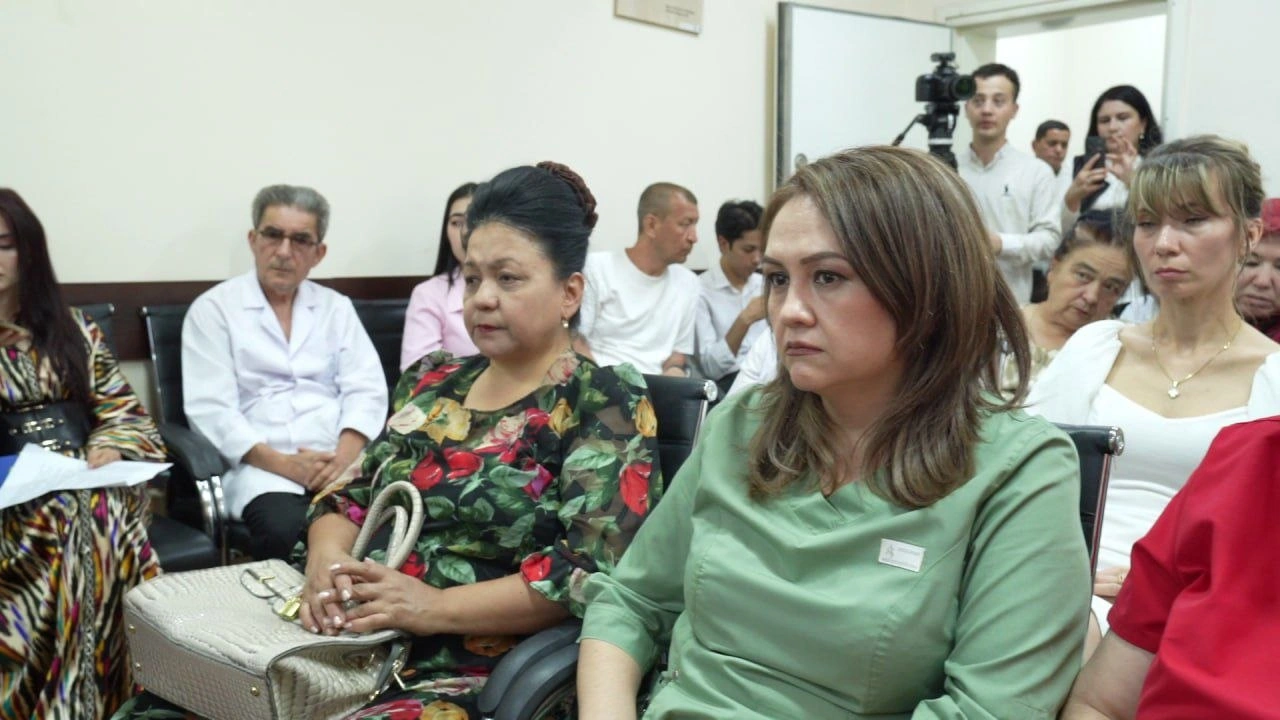
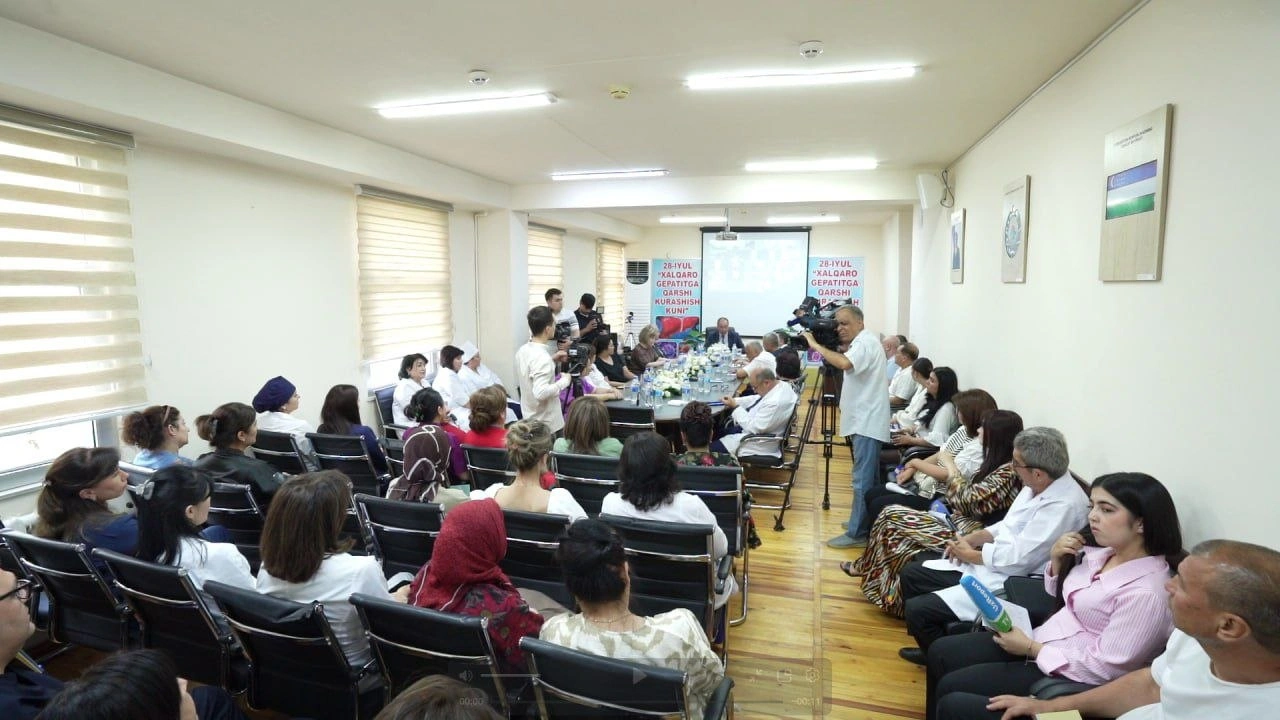
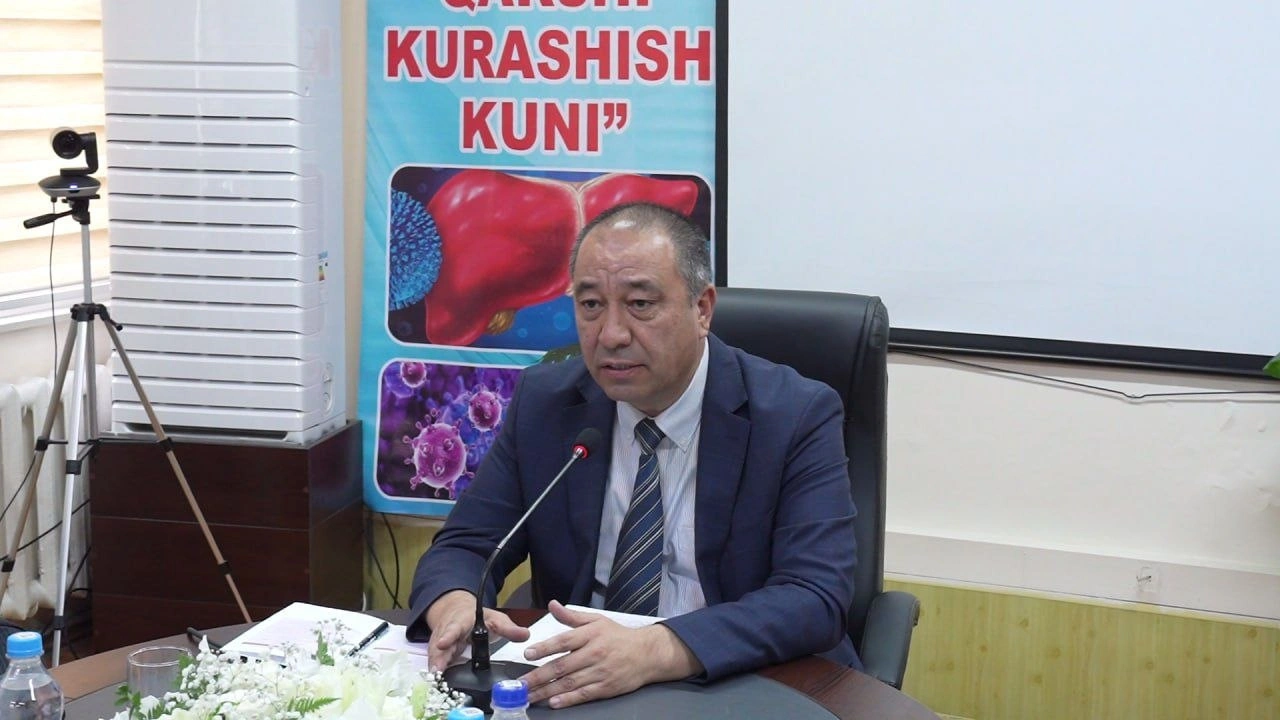
❗️July 28th — World Hepatitis Day
Every year, July 28 is widely celebrated worldwide as the World Hepatitis Day. The main goal is to further increase the attention of the world's population to hepatitis and increase their awareness of this disease.
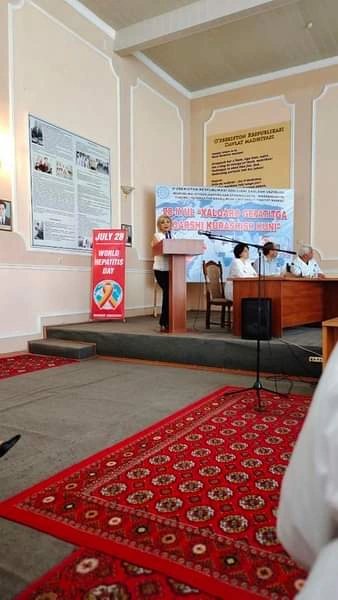
In this regard, on July 23, 2026, meetings and conversations were held with the participation of infectious disease specialists and primary care physicians from the Ministry of Health of the Republic of Uzbekistan, the Committee for Sanitary and Epidemiological Well-being and Public health of the Republic of Uzbekistan, the Republican specialized scientific and practical medical center for epidemiology, microbiology, infectious and parasitic diseases, the Research Institute of Virology, and the regional center branch.
The conference was organized to ensure the implementation of the Decree of the President of the Republic of Uzbekistan dated May 16, 2022, № PD-243 “On improving measures to counter the spread of certain relevant viral infections.”
The conference was attended by representatives of the Ministry of Health of Uzbekistan, Committee for Sanitary and Epidemiological Wellbeing and Public Health, the Republican specialized scientific and practical medical center for epidemiology, microbiology, infectious and parasitic diseases, the scientific and research Institute of Virology, employees of the regional center's branch infectious diseases. hospitals, primary care physicians, hepatologists, and representatives of the media.
Details:
https://www.facebook.com/share/p/1BT84AgE87/
>July 28 — World Hepatitis Day
July 28 — World Hepatitis Day (https://uza.uz/uz/posts/28-iyul-halqaro-gepatitga-qarti-kurashish-kuni_743619)
According to the World Health Organization, every year 1.2 million people around the world become infected with the hepatitis B virus and 1 million people with the hepatitis C virus. Most sadly, 1.3 million people die every year from these viruses. This figure is even higher than deaths from HIV/AIDS and malaria.
Details: https://uza.uz/uz/posts/28-iyul-halqaro-gepatitga-qarşı-kurashish-kuni_743619
As we reported, a conference was held in our capital today on the occasion of "July 28 - International Hepatitis Day". (https://t.me/ssvuz/18963)
So, what issues were discussed there?
What work is being done to prevent hepatitis in our country?
Are the results achieved in treating patients satisfactory?
Every year, 1.4 million people die from hepatitis B and C viruses. What is the situation with this disease in Uzbekistan?
This was reported in detail at a press conference held by the Committee for Sanitary and Epidemiological Wellbeing and Public Health, the World Health Organization and the Scientific Research Institute of Virology on July 28 - World Hepatitis Day.
More information: https://gov.uz/oz/sanepid/news/view/73302
https://youtube.com/shorts/srTFvg47HT0?si=PYWCaLVyE6UP44uH
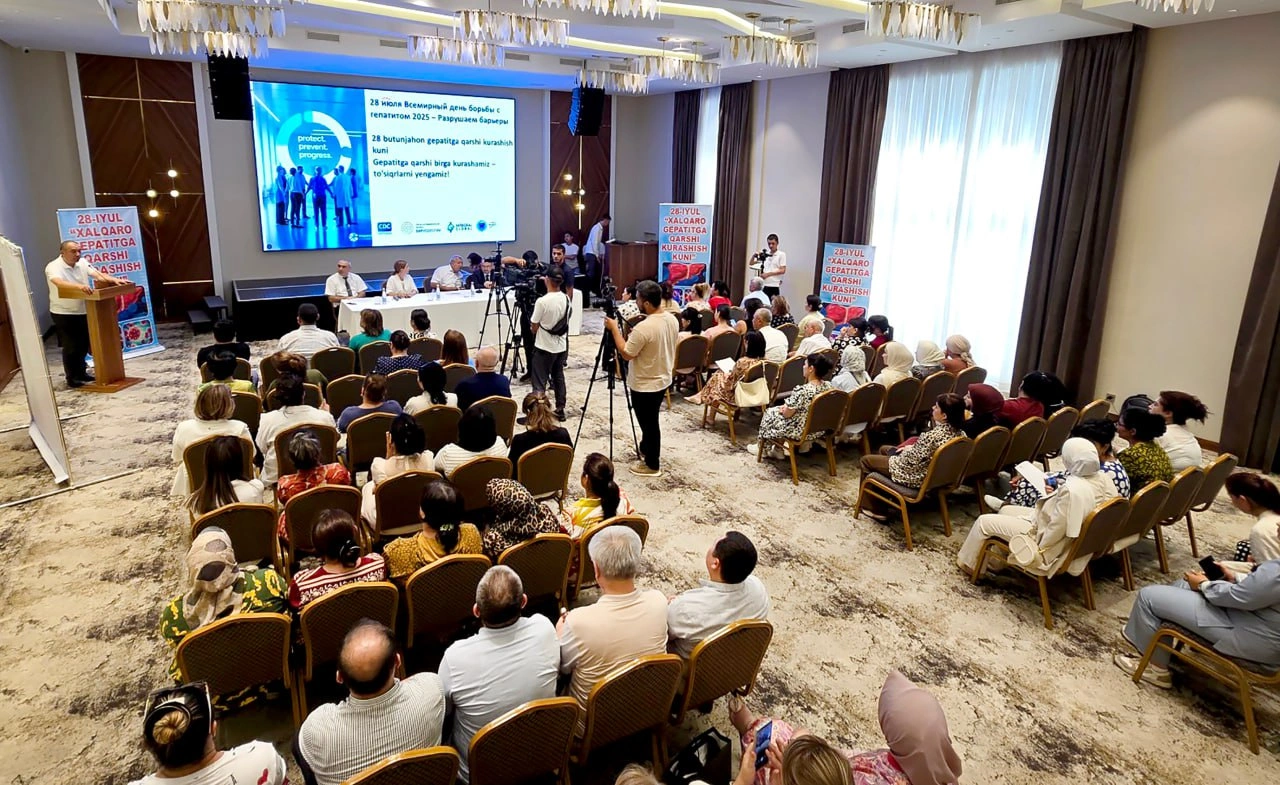

HSV: Free screenings are being conducted across our country for the early detection of hepatitis B and C
As is known, July 28 is widely celebrated around the world every year as World Hepatitis Day.
The main goal of this is to further increase the attention of the population of our planet to this disease and raise awareness about the disease.
In this regard, a conference is currently being held in collaboration with the Ministry of Health, the Committee for Sanitary and Epidemiological Wellbeing and Public Health, the Republican Specialized Scientific and Practical Medical Center for Epidemiology, Microbiology, Infectious and Parasitic Diseases, and the Scientific and Research Institute of Virology.
It is being attended by ministry officials, representatives of the World Health Organization Office in Uzbekistan, scientists in the field, and experts.
As noted, every year about 1.2 million people in the world are infected with hepatitis B and at least 1 million people are infected with the hepatitis C virus. According to data, 1.3 million people die from hepatitis B infection every year, and more than 350 thousand patients die from complications of hepatitis C.
Currently, a number of works are being carried out in our country for the timely prevention and diagnosis of this dangerous disease. In particular, in accordance with the relevant resolution of our President dated May 16, 2022, free screenings are being conducted in family and multidisciplinary central polyclinics in the regions for the early detection of hepatitis B and C.
In particular, by July 1, 2025, more than 1 million 595 thousand people in our country will have undergone these examinations, and patients with confirmed type C of the disease will be provided with the drugs “Daklatasvir” and “Sofosbuvir” free of charge.
Ministry of Health
Press Service.
Today, an international conference dedicated to "July 28 - International Hepatitis Day" was held in our capital.
At the event, organized by the Ministry of Health together with the Republican Specialized Scientific and Practical Medical Center for Epidemiology, Microbiology, Infectious and Parasitic Diseases and the Association of Hepatologists of Uzbekistan, the work being carried out in our country on the prevention, diagnosis and treatment of hepatitis was discussed in detail.
The video above, prepared by the Press Service of the Ministry of Health, details the details of this conference.
Today, a press conference dedicated to the "International Hepatitis Day" was held in our capital.
The conference was attended by representatives of the Representative Office of the World Health Organization in Uzbekistan, the Committee for Sanitary and Epidemiological Welfare and Public Health, the Republican Specialized Scientific and Practical Medical Center for Epidemiology, Microbiology, Infectious and Parasitic Diseases, the Research Institute of Virology, specialists from infectious disease hospitals, hepatologists and media representatives.
Today, a press conference dedicated to the "International Hepatitis Day" was held in our capital.
The event was attended by representatives of the Representative Office of the World Health Organization in Uzbekistan, the Committee for Sanitary and Epidemiological Welfare and Public Health, the Republican Specialized Scientific and Practical Medical Center for Epidemiology, Microbiology, Infectious and Parasitic Diseases, representatives of the Research Institute of Virology, employees of infectious disease hospitals, hepatologists and representatives of the media.
A person can live with hepatitis for years and not even realize it.
Press conference on the topic “Work to eliminate hepatitis in Uzbekistan”.
On July 27, 2023, at the Agency for Information and Mass Communications, representatives of the Committee for Sanitary and Epidemiological Peace and Public Health, the Research Institute of Virology, the Republican Scientific and Practical Medical Center for Specialized Epidemiology, Microbiology, Infectious Diseases and Parasitic Diseases, employees of infectious diseases hospitals, hepatologists and held a press conference dedicated to World Hepatitis Day, with the participation of media representatives on the topic “Work to eliminate hepatitis in Uzbekistan”.
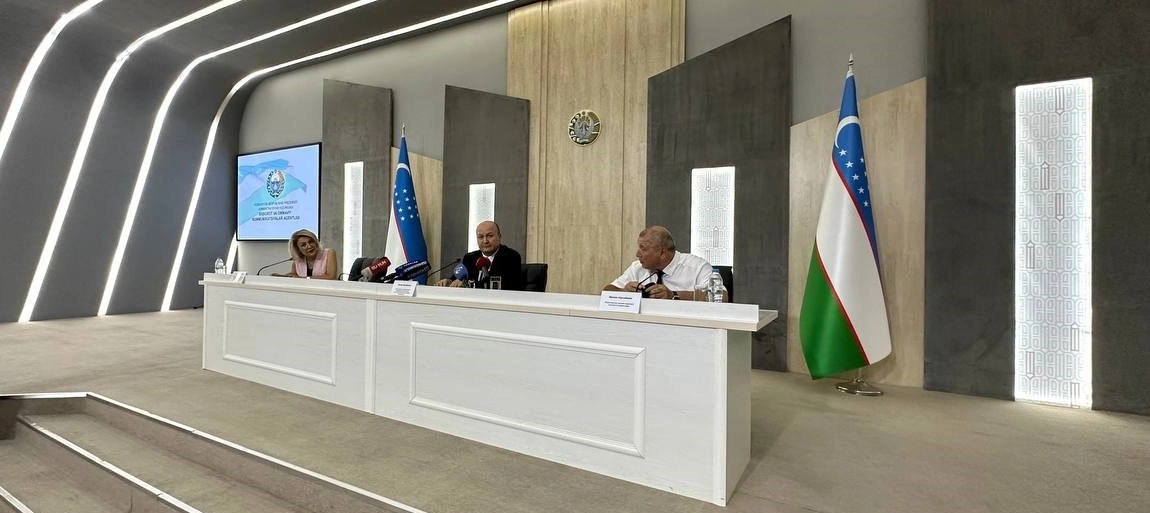
World Hepatitis Day hepatitis: press conference dedicated to the work carried out in this direction in Uzbekistan
World Hepatitis Day: press conference dedicated to the work carried out in this direction in Uzbekistan
Erkin Musaboev, Director of the Research Institute of Virology
Information on the work carried out to eliminate and prevent viral hepatitis C (HCV) in Uzbekistan
On July 28 of this year, in Tashkent, in the conference hall of the Radisson Blue Hotel, an event dedicated to “July 28 – International Hepatitis Day", organized by the Ministry of Health of the Republic of Uzbekistan, the Research Institute of Virology of the Republican Specialized Scientific and Practical Medical Center for Epidemiology, Microbiology, Infectious and Parasitic Diseases, and the Association of Hepatologists of Uzbekistan.
Representatives of the Ministry of Health, the Service for Sanitary and Epidemiological Welfare and Public Health of the Republic of Uzbekistan, employees of the infectious diseases hospital, hepatologists and the media, as well as foreign specialists invited from Egypt and Kazakhstan took part in it.
According to WHO, about 325 million people worldwide are infected with the hepatitis B virus and at least 200 million people with the hepatitis C virus. According to 2020 data, 500-700 thousand people die annually from hepatitis B infection, and more than 350 thousand patients die from complications of hepatitis C. According to the World Hepatitis Alliance, as of July 2021, 1.4 million people die from hepatitis B and C viruses every year. And this means more than just HIV/AIDS and malaria.
The participants and guests of the conference were welcomed by the head of the Sanitary and Epidemiological Welfare and Public Health Service of the Republic of Uzbekistan Yusupaliev B.K.
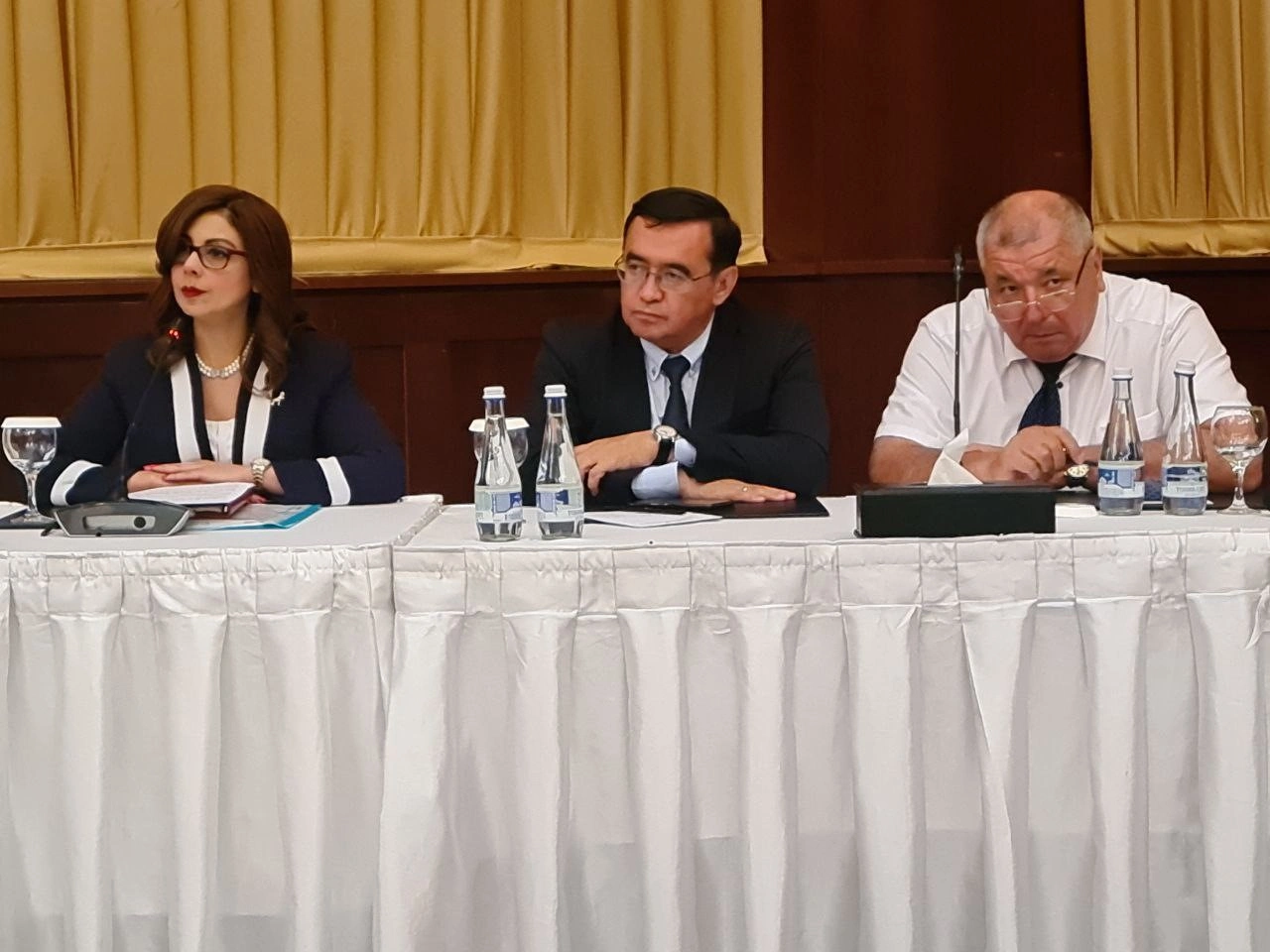
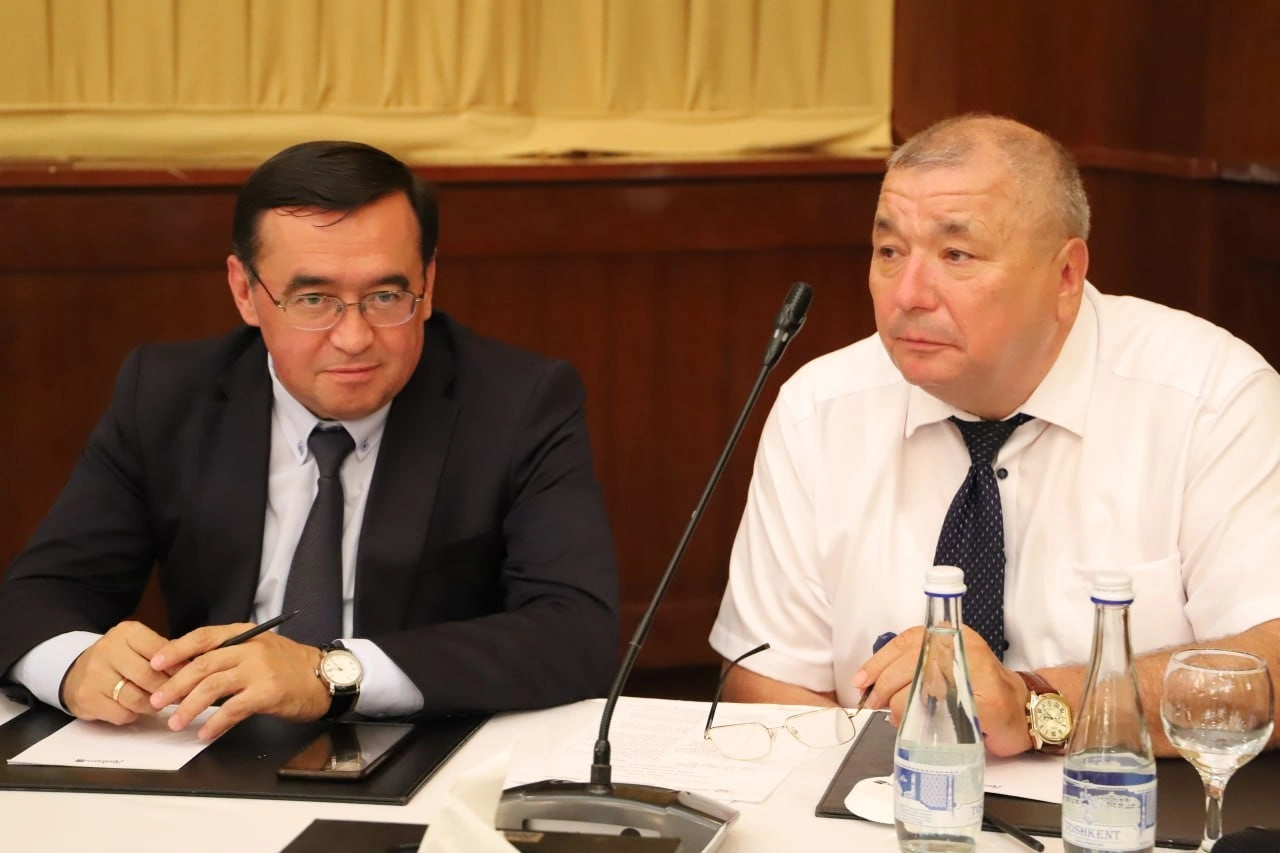
Lectures were heard on the topic “Programs for the elimination of viral hepatitis B and C in the world and in Uzbekistan, successes and problems, experience of different countries".
Mohamed Hasani, Kilichev Mansurbek Bakhtiyorovich, Ms. Amira Fahmi - Experience and support of the Arab Republic of Egypt in the implementation of the National Program for the Elimination of Viral Hepatitis in Uzbekistan (Egypt)
Gadoev Zh.T. - Spread of viral hepatitis in the WHO European Region (Republic of Uzbekistan)
Musabaev E.I. - The National Program for the Elimination of Viral Hepatitis is in effect in Uzbekistan. Results, prospective plans (Republic of Uzbekistan)
Nersesov A.V. - Metabolic-dependent fatty liver disease (MAFLD): new paradigms (Republic of Kazakhstan)
Kasimova R.I. - The meaning of the vector “Liver and intestines”.
A total of 130 people took part in the event offline and online, of which 60 were from the city, 70 from the region.


During the event, representatives of the media received answers to all their questions.
Dear Compatriots!
On the occasion of World Hepatitis Day, we invite you to a conversation with specialists from the Research Institute of Virology.
We offer the following topics for you:
How to protect your family from viral hepatitis?
Bakieva Shokhista Rustamovna, infectious disease specialist, researcher.
Is there a cure for viral hepatitis D?
Rano Ibragimovna, infectious disease specialist, researcher
Date:
July 27
Time: 16:00
Place: Zoom platform https://us02web.zoom.us/j/87014538814
If you have problems accessing Zoom, please contact us: +998902173787
+998901457673
+998942162406
+998977978893
Don't be indifferent to your health
Share with your loved ones too!
https://www.facebook.com/539448807972985/videos/425624566179440
Every year, July 28 is widely celebrated all over the world — International Hepatitis Day.
Every year, July 28 is widely celebrated around the world as International Hepatitis Day. The main goal is to further raise awareness of the world's population about hepatitis and raise awareness of this disease.
In this regard, the Republican Specialized Scientific and Practical Medical Center for Epidemiology, Microbiology, Infectious and Parasitic Diseases, together with the Ministry of Health of the Republic of Uzbekistan, the Sanitary and Epidemiological Welfare and Public Health Service of the Republic of Uzbekistan, the Research Institute of Virology, the Republican Specialized Center for Epidemiology, Microbiology and Epidemiology, the Scientific and Practical Medical Center for Infectious and Parasitic Diseases and the Association of Hepatologists of Uzbekistan organized an event in pursuance of the Decree of the President of the Republic of Uzbekistan dated May 16, 2022 No. PP-243 "on improving measures to combat the spread of some current viral infections".
It was attended by employees of the Ministry of Health, the Sanitary and Epidemiological Welfare and Public Health Service, the infectious diseases hospital, doctors of the scientific center, hepatologists and media workers.
According to WHO, every year about 325 million people in the world are infected with the hepatitis B virus, and at least 200 million with the hepatitis C virus. According to 2020 data, 500-700 thousand people die annually from hepatitis B infection, more than 350 thousand patients die from complications of hepatitis C. According to the World Hepatitis Alliance for July 2021, 1.4 million people die annually due to the hepatitis B and C virus. This is more than HIV / AIDS and malaria.
In the decree of the President of our country "on improving measures to combat the spread of certain current viral infections" dated May 16, 2022, the main areas for further improvement and expansion of medical and social assistance provided to the population for timely prevention and diagnosis, treatment of certain viral infections among the population are defined as:
— conducting screening studies in all regions of the republic for the early detection of viral hepatitis "B" and "C" and increasing the coverage of treatment for the disease;
— full coverage of vaccination against hepatitis B infection for individuals at increased risk of infection, including healthcare workers working with blood and its components;
- free provision of medicines during treatment of patients who have been diagnosed with viral hepatitis C during screening examinations;
- phased full provision of consumables (reagents and test kits) for detecting viral infections in the primary health care system;
- creation and maintenance of a single electronic registry of chronic viral liver diseases in all medical and preventive institutions, the sanitary and epidemiological service and non-governmental medical organizations;
- improving control over the safety, quality and effectiveness of vaccines, test kits and antiviral drugs;
- conducting scientific research on the problems of viral infections, introducing an automated control system diseases;
— conducting large-scale explanatory, propaganda and propaganda work among the population on measures to prevent the transmission of viral infections.
In our republic, together with the Ministry of Health of the Republic of Uzbekistan, the service of sanitary and epidemiological welfare and public health of the Republic of Uzbekistan, free screening processes continue in the following family clinics:
Tashkent city:
- Central clinic of Shaykhantakhur district;
- Central clinic of Chilanzar district;
- Central clinic of Uchepa district;
- Central clinic of Almazar district;
- Family clinic No. 8 of Mirzo-Ulugbek district;
- Family clinic No. 30 of Yashnabad district.
Andijan region:
- Family clinics No. 1, 2, 3 and 4 of Andijan city.
Bukhara region:
- Family clinics No. 4, 5 and 11 of Bukhara city;
— Central multidisciplinary clinic of Gijduvan district.
Jizzakh region:
- Jizzakh city 1-, 2-, 3-, 4 and family clinics No. 5.
Kashkadarya region:
- Multidisciplinary central clinic of Karshi city;
- Karshi city family clinic No. 4, 5 and 6;
— Multidisciplinary central polyclinic of Chirakchi district.
Navoi region:
- Family polyclinics № 1, 2, 3 and 4 of the city of Navoi.
Namangan region:
- Family polyclinics № 1, 3, 9 and 10 of the city of Namangan.
Samarkand region:
- Family polyclinics № 2, 4, 9 and 12 of the city of Samarkand.
Surkhandarya region:
- Termez city 1-, 2-, 3-, 4 and family polyclinics № 5.
Syrdarya region:
- Central multidisciplinary polyclinic of the Syrdarya district;
- Multidisciplinary central polyclinic of the Mirzabad district;
— Multidisciplinary central polyclinic of the city of Yangiyer;
- Family polyclinics No. 2 and 4 of the city of Gulistan;
Tashkent region:
- Multidisciplinary central polyclinic of the Verkhne-Chirchik district, family polyclinics No. 66 and 67.
— Family doctor's office in Saxony.
Fergana region:
- Family clinics No. 1, 4, 5 and 6 of the city of Fergana.
Khorezm region:
—Multidisciplinary central clinic of the city of Urgench and the Republic of Karakalpakstan:
Family clinics No. 1, 2 and 3.
- Family clinics No. 1, 3, 5 and 6 of the city of Nukus.
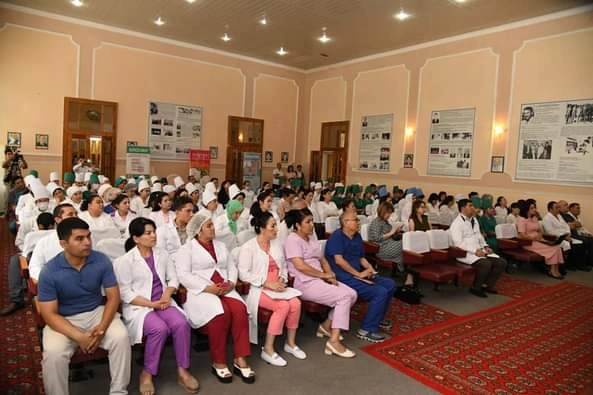
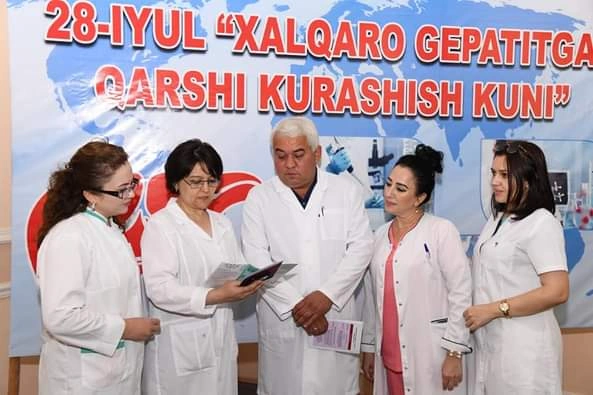
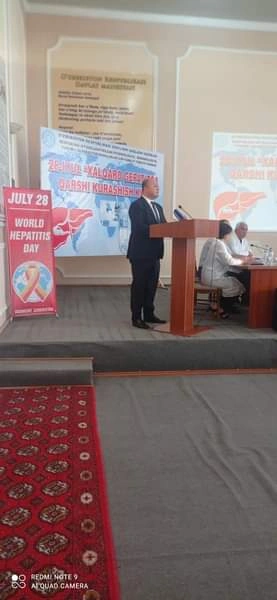
During the event, industry experts spoke, spoke in detail about the harm of hepatitis, measures for its prevention. The participants were also provided with information about the work being carried out in our country today to eradicate and detect this disease early.
The event was attended by 134 medical workers, 80 of them offline and 54 online. Among the foreign representatives, Jin Hee Kim, a graduate student at the Yale School, participated.
In conclusion, the media representatives received comprehensive answers to all their questions.
An article about our hepatitis elimination project has been published on the WHO website
This is a huge achievement for our country!
https://www.who.int/uzbekistan/news/item/28-07-2022-scaling-up-hepatitis-response-in-uzbekistan
Webinar of the WHO Regional Office for Europe entitled “Bringing Hepatitis Treatment Closer to You”
Date: 29 July, 2022.
Webinar participants:
- Nicole Seguy, Rachael Halford, World Hepatitis Alliance;
- Rui Tato Marinho, Chair of the National Viral Hepatitis Programme (Portugal)
- Gayane Ghukasyan, WHO Country Office Armenia;
- Philippa Easterbrook, WHO Headquarters;
- Marcelo Naveira-WHO/Europe
- Maia Tsereteli, National Center for Disease Control and Public Health Georgia
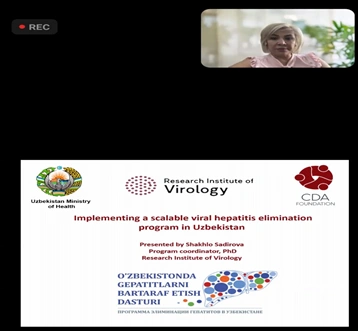
- Shakhlo Sadirova, National Institute of Virology, Uzbekistan
- Giorgi Kuchukhidze, WHO/Europe;
- Jessica Hicks, World Hepatitis Alliance
- Sandra Dudareva, Robert Koch Institute (Germany)
- Soudeh Ehsani, WHO/Europe;
Overall objective of the event
The objective of this open webinar is to discuss regional progress made since the adoption of the previous Action Plan and to present opportunities for further improvement of the response to viral hepatitis in the health sector, including new recommendations on simplified service provision, diagnosis and treatment of hepatitis C, a training programme on simplified social management of hepatitis C case for non-specialists adapted to the regional context, an online repository of best practice descriptions and the COVIMPACT Hepatitis project, planned and implemented under the leadership of the Robert Koch Institute (RKI) in collaboration with the WHO Regional Office for Europe, entirely dedicated to eliminating hepatitis in the context of the current COVID-19 pandemic in Europe and Central Asia.
Objectives
- To present key messages and new recommendations on simplified service provision, diagnosis and treatment of hepatitis C.
- To present the planned training program on social support of a case of hepatitis C for non-specialists.
- To share preliminary results of the implementation of the project “COVIMPACT Hepatitis” RCT and the WHO virtual library.
Abstract
Viral hepatitis is an important public health problem – a disease with a significant burden in the WHO European Region. An estimated 14 million people in the WHO European Region are living with chronic hepatitis B virus infection and 12 million are living with chronic hepatitis C virus infection, causing 107 000 deaths due to viral hepatitis each year in the Region.
The adoption of the Action plan for the health sector response to viral hepatitis in the WHO European Region at the 66th session of the WHO Regional Committee for Europe (resolution EUR/RC66/R10), adapting the Global Health Sector Strategies on Viral Hepatitis to the regional context, reflected the commitment to accelerate public health policy development on viral hepatitis. Since then, many Member States have developed national plans and strategies to eliminate viral hepatitis. To achieve the elimination of viral hepatitis as a public health threat by 2030, the Action Plan proposed milestones for 2018 and targets for 2020, and has served as a basis for improving the response in many Member States since its inception.
Over thirty Member States in the WHO European Region have developed and/or implemented national strategies and plans to eliminate viral hepatitis.
The webinar covered recent regional achievements, new recommendations on simplified service delivery, diagnosis and treatment of hepatitis C, including in children and adolescents, a new curriculum on simplified social case management for non-specialists, and examples of decentralized and integrated care; In addition, a session on research and innovation will be held, where the results of the “COVIMPACT Hepatitis” project will be presented. Robert Koch Institute and the WHO Virtual Library.
At the end of the webinar, questions were asked on the reports of interest and each participant answered their question.
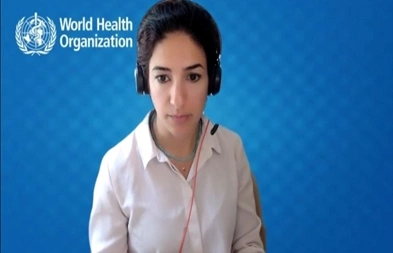
World Hepatitis Day: press conference dedicated to the work
World Hepatitis Day: press conference dedicated to the work carried out in this direction in Uzbekistan
Botir Kurbanov, Deputy Chairman of the Committee of Sanitary and Epidemiological Service and Public Health
Information on the work being done to combat hepatitis in Uzbekistan